Eco-friendly and pet-safe pest control: what to ask before you book
By Ethan Silva · Updated 2026-06-23
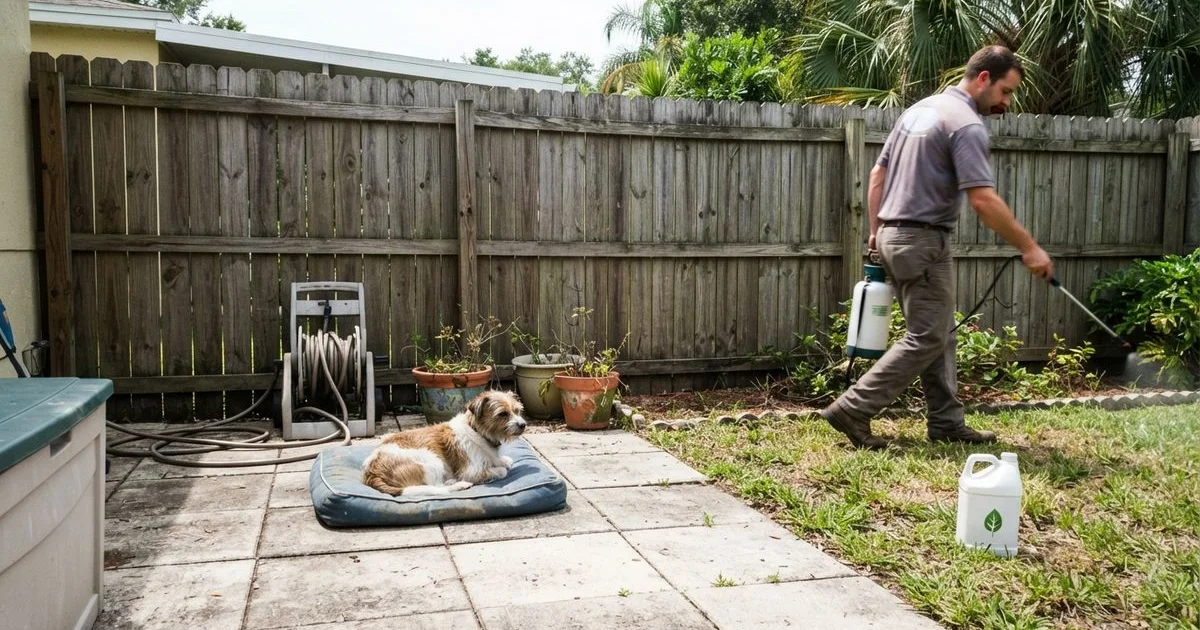
Eco-friendly and pet-safe pest control gets marketed a lot and defined precisely not nearly enough. Before booking, it is worth understanding what these terms typically mean in practice and what to ask a provider so you know exactly what is going on your property.
What “eco-friendly” and “pet-safe” usually mean
Neither term has one single regulated definition, which is part of why it is worth asking specifics rather than taking the label at face value. In practice, providers using these terms are usually referring to one or more of the following:
- Botanical or plant-derived active ingredients instead of synthetic pyrethroids or organophosphates
- Reduced-risk products registered by the EPA under a lower toxicity classification
- Targeted application methods, like bait stations or crack-and-crevice treatment, that limit broad surface exposure compared to a full perimeter spray
- Insect growth regulators, which interrupt pest reproduction rather than using a contact kill mechanism, generally considered lower risk to non-target animals
How it compares to standard treatment
| Factor | Standard treatment | Eco-friendly/pet-safe treatment |
|---|---|---|
| Typical cost | Baseline pricing | Often somewhat higher |
| Reentry time after application | Varies by product, commonly a few hours | Often similar, confirm with provider |
| Durability outdoors | Longer-lasting in heat and rain | Some botanical products break down faster, may need more frequent application |
| Effectiveness on heavy infestations | Generally strong | Can be strong for general pests; may need combination approach for severe or specific problems |
Questions worth asking before you book
- What specific product is being used, and can I see the label or safety data sheet?
- What is the recommended reentry time for people and pets after application?
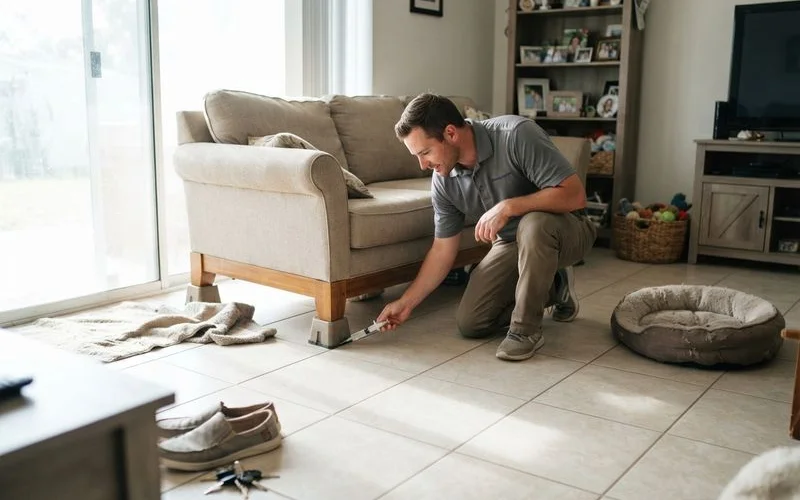
- Is the product applied as a broad spray, or targeted to cracks, baseboards, and known entry points?
- How does this approach perform on my specific pest problem, and would you recommend combining it with any other method?
- If I have fish ponds, beehives, or a vegetable garden, does this product carry any specific precautions?
Where pet safety actually comes from
The biggest factor in pet safety is not really the product category, it is following label directions and reentry times correctly, no matter which product is used. A synthetic product applied and dried per label instructions is generally low risk once dry; an eco-friendly product applied incorrectly or without observing reentry time carries its own risk. If pet safety is your primary concern, ask directly about reentry time and application method rather than relying on marketing language alone. For the fuller breakdown of what is actually risky and what is not, see our guide on whether pest control is safe for kids and pets.
Outdoor treatments and bee safety
Eco-friendly claims come up a lot with outdoor mosquito and lawn pest treatment, where the exposure question extends beyond pets to bees and other pollinators. Most barrier sprays are applied to the underside of foliage rather than open blooms specifically to reduce contact with foraging bees, but timing still matters, applying in early morning or evening when bees are less active reduces exposure further. If you keep a vegetable garden, a beehive, or a yard that regularly attracts pollinators, mention that specifically when booking so the provider can adjust timing or product choice rather than treating it as an afterthought.
When eco-friendly makes the most sense
Eco-friendly and reduced-risk approaches tend to work well for general ant, roach, and spider pressure in homes with pets, young children, or someone with chemical sensitivities in the household. For more resistant or severe infestations, bed bugs, established termite colonies, some providers recommend a combination approach, using a targeted reduced-risk product for routine maintenance while reserving stronger tools for an active, established problem.
To compare local providers offering eco-friendly and pet-safe options in the Tampa area, the eco-friendly pest control category lists relevant service details.
For more on how this directory scores and ranks providers, see the ranking methodology. Visit the homepage for other Tampa pest topics.
Frequently asked questions
- Is eco-friendly pest control actually safe for pets?
- Products marketed as eco-friendly or pet-safe are generally formulated to be lower risk once dry, but pets can still be affected during and shortly after application, so the safest approach is asking the provider for specific reentry times and keeping pets away until treated areas are fully dry.
- Does eco-friendly pest control cost more?
- Often yes, moderately. Botanical or reduced-risk formulations and more frequent application in some cases can push pricing somewhat above standard synthetic treatment, though the gap varies by provider and pest type.
- Is eco-friendly pest control as effective as traditional treatment?
- It can be, especially for general pest pressure, but some botanical and reduced-risk products break down faster in heat and rain, which may mean more frequent reapplication to hold the same level of control a longer-lasting synthetic product provides.
- What does 'pet-safe' actually mean on a label or in marketing?
- There is no single regulated definition, so it is worth asking a provider directly what product they use, what its label says about pets, and what reentry time it recommends, rather than relying on the phrase 'pet-safe' alone.