Is pest control safe for kids and pets?
By Ethan Silva · Updated 2026-06-30
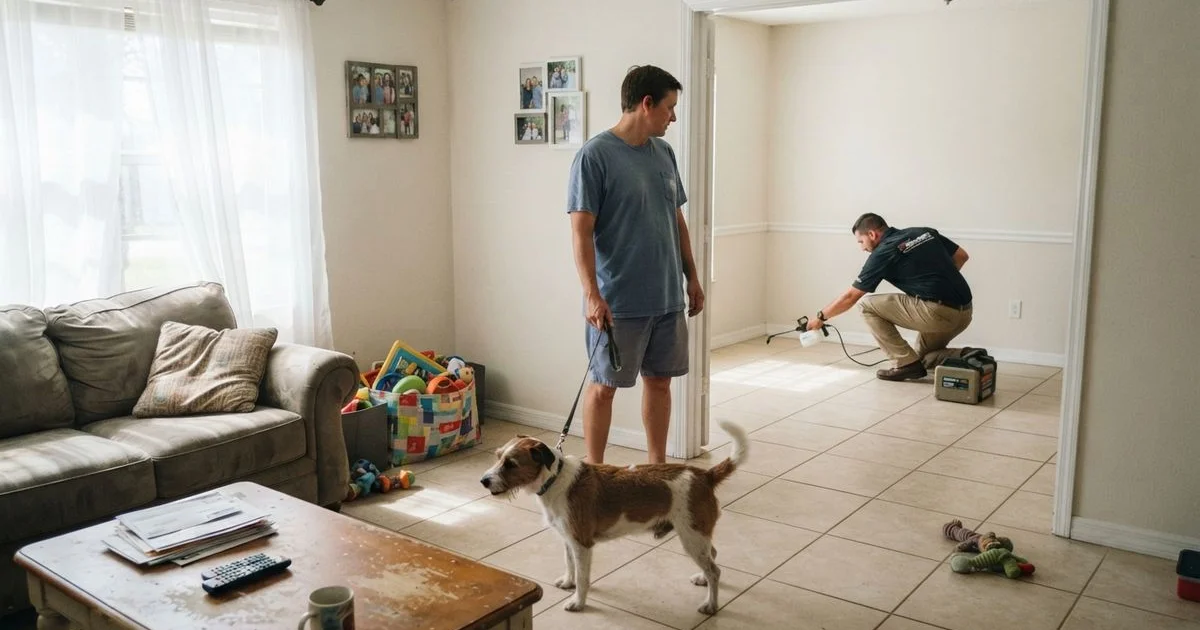
Pest control safety around kids and pets is not really about which company or product category you choose, it comes down to following label directions, application method, and reentry time correctly. This guide is general information, not medical or veterinary advice.
What actually determines safety
The application method matters more than the marketing. Targeted treatments, cracks, crevices, bait stations, keep product out of open living areas where kids and pets spend the most time. A broad interior spray covering exposed floors and surfaces carries more exposure risk than the same product applied only to baseboards and entry points.
Reentry time is the practical safety window. Every pesticide label specifies how long an area should be avoided after application, which is determined through EPA registration testing, not guesswork. Following this window is the single most reliable safety step available to a homeowner.
Product choice is a smaller factor than people assume. Both standard and reduced-risk or eco-friendly products are safe when label directions are followed and unsafe when they are not. Choosing a lower-toxicity product is a reasonable preference, but it is not a substitute for observing reentry times correctly.
Practical precautions to take
| Precaution | Why it helps |
|---|---|
| Ask for the specific reentry time before the technician leaves | Removes guesswork about when it is safe to return to treated areas |
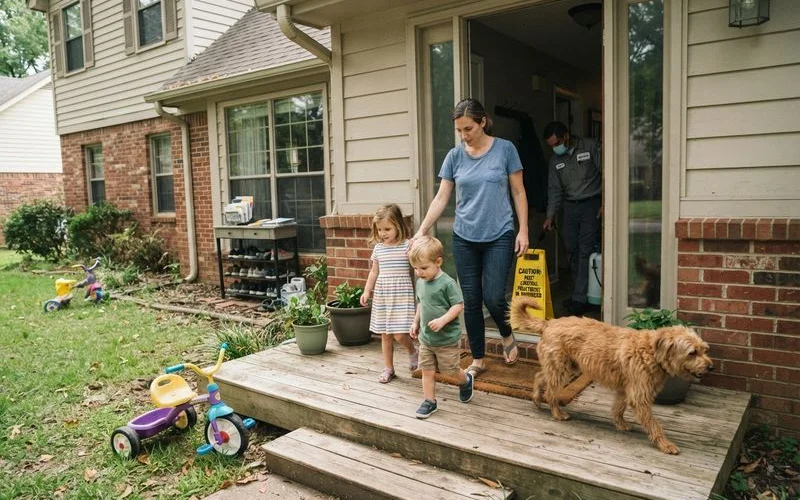
| Keep kids and pets in a separate room during treatment | Avoids exposure to wet product or technician movement through the space |
| Ask where bait stations were placed | Lets you monitor those specific spots, especially with curious pets |
| Store or cover pet food and water bowls before treatment | Prevents accidental contact with treated surfaces nearby |
| Ventilate treated rooms per label instructions if recommended | Speeds up drying and reduces residual odor exposure |
Questions worth asking your technician
- What product are you using today, and what does the label say about reentry time for kids and pets?
- Are you doing a broad spray or a targeted crack-and-crevice application?
- Where are bait stations being placed, and are they tamper-resistant?
- Is there anything specific I should do to prepare the home, moving toys, covering fish tanks, that sort of thing?
Special situations
Fish tanks and aquariums are sensitive to airborne pesticide exposure even at low levels, so covering or temporarily relocating them and asking the technician about specific precautions is worth doing.
Reptiles and small mammals in open-air enclosures may need similar temporary covering or relocation during treatment.
Pregnant household members sometimes prefer extra caution even where standard precautions are followed; ask about reduced-risk or eco-friendly product options if this applies to your household.
Outdoor and lawn treatments
The same principles apply outside, but the timing looks different. If your yard gets a barrier spray or lawn pest treatment, ask how long to keep kids and pets off the treated grass, since this is often measured from when the product dries rather than a fixed number of hours, and drying time varies with humidity and direct sun. A yard treated in the morning during Florida’s humid summer stretch may need longer before it is fully dry than the same treatment on a cooler, drier day.
The bottom line
For most households, following the reentry time on the label and keeping kids and pets in a separate area during application covers the practical safety concerns. If anyone in the household has specific chemical sensitivities, respiratory conditions, or you have exotic pets with unusual sensitivities, raise that directly with the technician before the visit so they can adjust the approach.
To compare local providers who discuss product choice and safety practices upfront, the eco-friendly pest control category lists relevant options in the Tampa area.
If a child or pet shows signs of a reaction after treatment, contact a physician or veterinarian and reference the specific product used rather than waiting to see if symptoms resolve on their own.
For more on how this directory scores providers, see the ranking methodology. Visit the homepage for other Tampa pest topics.
Frequently asked questions
- Do I need to leave the house when pest control treats my home?
- For standard general pest treatment, usually not, though you may be asked to keep kids and pets out of specifically treated areas until they dry, which is typically a matter of a couple of hours rather than the full day.
- Are baits and traps dangerous to curious kids or pets?
- Bait stations used by licensed technicians are designed to be tamper-resistant and are typically placed out of reach in areas like under cabinets or behind appliances, but it is still worth asking where bait was placed so you can keep an eye on those specific spots.
- How long after treatment can pets go back into a room?
- This depends on the specific product used, so ask the technician directly rather than assuming, reentry times can range from a couple of hours to overnight depending on the treatment type and area.
- What if my pet or child does have a reaction after treatment?
- Contact a veterinarian or physician promptly and let them know the specific product used, which the technician or invoice should identify, since that information helps determine appropriate care.