Pest control licensing in Florida: how to verify a company is legit
By Ethan Silva · Updated 2026-06-25
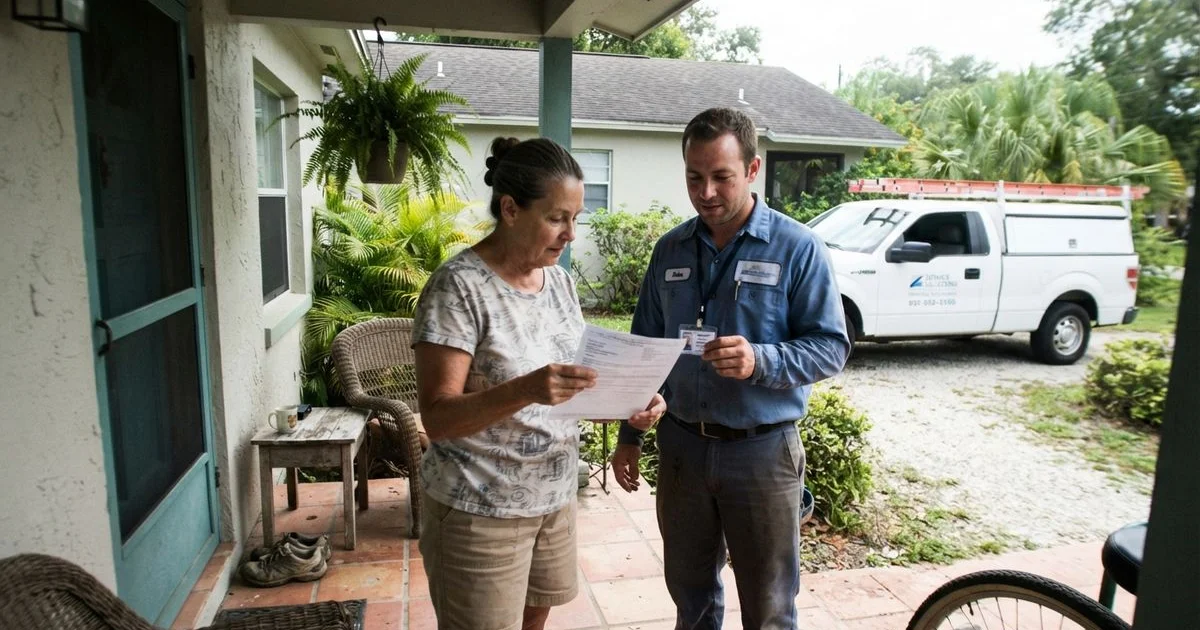
Anyone can put “pest control” on a truck. Whether the person showing up is actually licensed to apply pesticides in Florida is a separate question, and one worth answering before you let someone treat your home. Aggressive door-to-door solicitation and unclear credentials show up often enough in customer complaints that a quick verification step is worth the few minutes it takes.
What licensing actually requires in Florida
Florida regulates pest control through the Florida Department of Agriculture and Consumer Services (FDACS). At a high level:
- The business needs a pest control business license to operate legally in the state.
- Individual technicians applying restricted-use pesticides generally need to be a certified pest control operator (CPO), or be working directly under one’s supervision.
- Certification categories differ by pest type. General household pest control, termite and other wood-destroying organism work, and lawn and ornamental pest control each require separate certification, so a company licensed for general pests is not automatically certified for termite treatment.
This structure exists specifically because pesticide application carries real risk if done incorrectly, both to the property and to the people applying it, so the state requires demonstrated training before someone is allowed to do this work independently.
How to verify a company before hiring
- Ask directly for the license number. A legitimate company will provide this without hesitation, often on their invoice, website, or vehicle signage already.
- Check it against the state’s public license search. FDACS maintains a searchable database of licensed pest control businesses and certified operators, which lets you confirm a license is current and in good standing rather than relying on the company’s word alone.
- Confirm the category matches the work. If you are hiring for termite treatment specifically, confirm the technician or business carries certification for that category, not just general household pest control.
- Check for insurance, separately from licensing. Licensing confirms legal authority to apply pesticides; liability and workers’ compensation insurance is a separate protection worth asking about, especially for larger jobs involving structural work like exclusion or fumigation.
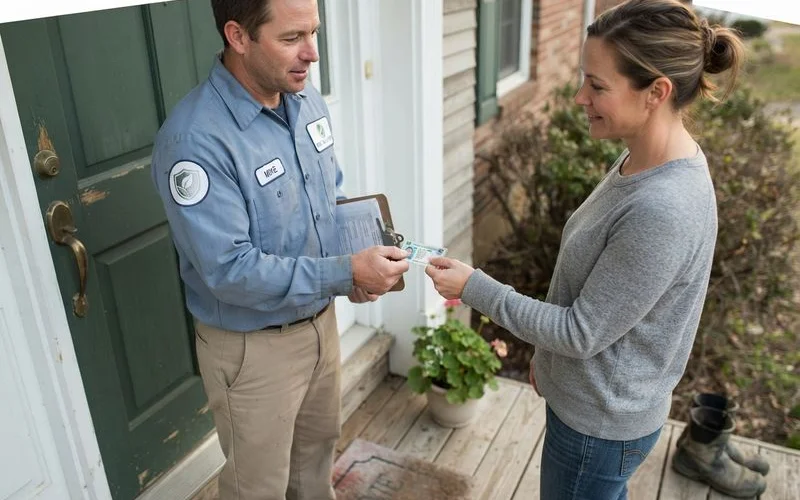
Red flags worth taking seriously
| Red flag | Why it matters |
|---|---|
| Refuses to provide a license number | A legitimate, licensed company has no reason to withhold this |
| Aggressive door-to-door solicitation, ignoring no-solicitation signs | A pattern reported often enough in this market to treat as a caution sign |
| Pressure to sign a long-term contract same-day | Reputable companies generally allow time to review contract terms |
| Cash-only payment insisted upon | Not automatically disqualifying, but worth pairing with other verification steps |
| Vague answers about which specific products are used | Licensed technicians should be able to name products and their EPA registration |
Checking beyond the license itself
A current license confirms legal standing, not track record. Once you have verified licensing, checking a company’s complaint history through FDACS consumer services or the Better Business Bureau adds a second layer of vetting, particularly useful if two companies both check out as properly licensed and you need another way to compare them. A pattern of unresolved billing or service complaints is worth weighing even against a company with a technically clean license.
Why this matters beyond legal compliance
Licensing is not just a box to check, it reflects actual training in pesticide safety, application rates, and label compliance. An unlicensed or improperly certified applicator is more likely to misapply a product, either ineffectively (wasting your money on a treatment that does not work) or unsafely (over-applying near a home with children or pets). Verifying licensing upfront is a small step that meaningfully reduces both risks.
Renters have their own version of this question, since it is not always the tenant who gets to pick the company. Our guide on landlord and tenant pest control responsibilities in Florida covers who is on the hook for hiring and paying for a licensed provider.
This guide provides general information about Florida pest control licensing requirements and is not legal advice. For specific questions about a company’s standing or a dispute, FDACS’s consumer services division and, where appropriate, a licensed attorney are better resources than general guidance like this.
For more on how this directory reviews and scores providers, see the ranking methodology. Visit the homepage for pest control topics relevant to Tampa homeowners.
Frequently asked questions
- What license should a Florida pest control company have?
- Florida requires businesses applying pesticides to hold licensing through the Florida Department of Agriculture and Consumer Services, and individual technicians applying restricted-use products typically need to be a certified pest control operator or working under one's supervision.
- How do I actually check a company's license?
- The Florida Department of Agriculture and Consumer Services maintains a public license search you can use to verify a business license number and its current status before hiring, rather than relying on a company's own claim that they are licensed.
- Are there different licenses for different pest types?
- Yes, Florida licensing categories differ by the type of pest control work performed, general household pests, termite and wood-destroying organism work, and lawn and ornamental pest control each have their own certification requirements under FDACS.
- What if a company can't or won't provide a license number?
- Treat that as a serious red flag. A legitimate, licensed company should be able to provide its license number without hesitation, and you can independently confirm it through the state's public search rather than taking their word for it.