Bed bug treatment options compared: heat, chemical, and DIY
By Ethan Silva · Updated 2026-06-11
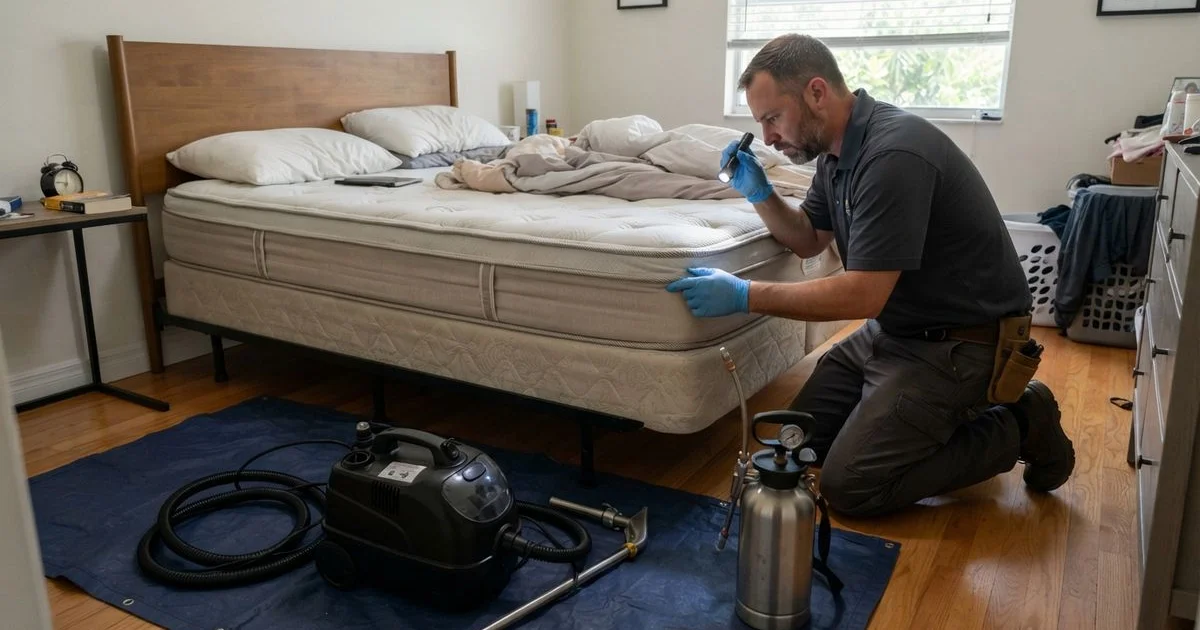
Bed bugs bring a specific kind of urgency: the longer treatment is delayed, the more rooms tend to get involved. Three approaches dominate the market, heat, chemical, and do-it-yourself, and each comes with real tradeoffs in cost, effectiveness, and how much your household gets disrupted.
The three approaches, side by side
| Approach | How it works | Typical cost | Disruption |
|---|---|---|---|
| Heat treatment | Raises room temperature enough to kill bugs and eggs in one pass | Often the higher end of the $1,800-$2,800 range | Home must be vacated for several hours; items sensitive to heat need to be removed first |
| Chemical treatment | Residual insecticide applied to cracks, seams, and hiding spots | Can start lower than heat, whole-home jobs often land in a similar $1,800+ range | Usually one to two visits with a follow-up; some prep and post-treatment waiting required |
| DIY | Store-bought sprays, steam, encasements | A few dollars per treatment plus encasement cost | Ongoing effort, repeated applications, uncertain results on established infestations |
These figures reflect ranges reported across Tampa-area providers and are not a quote for a specific home. Confirm final pricing with a technician after they see the extent of the problem.
Heat treatment: what it involves
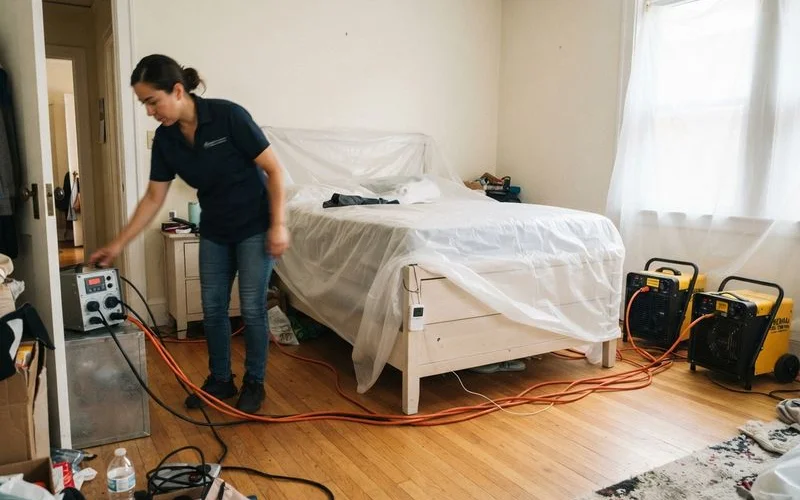
A heat treatment brings an entire room, or sometimes a whole unit, up to a temperature bed bugs and their eggs cannot survive, typically well above 120 degrees Fahrenheit, held for enough time to penetrate mattresses, furniture, and wall voids. The advantage is speed: a single treatment can address an entire infestation in one day, including eggs that chemical treatments sometimes miss on the first pass.
The tradeoff is logistics. Heat-sensitive items, electronics, candles, some plastics, need to be removed or protected beforehand, and the home needs to be empty during treatment for safety and to let the temperature climb properly. It also tends to sit at the higher end of the price range because of the specialized equipment involved.
Chemical treatment: what it involves
Chemical treatment uses residual insecticides applied directly to cracks, baseboards, bed frames, and other hiding spots, sometimes paired with a growth regulator that stops eggs from developing normally. Because residual products keep working for days or weeks after application, chemical treatment often requires a follow-up visit two to three weeks later to catch bugs that hatched after the first visit.
This approach usually costs less upfront per visit than heat, but the total across an initial treatment plus a follow-up can land in a similar range. It also tends to be less disruptive day to day, since you are not vacating the home for a full treatment window, though some rooms may need to stay off-limits while product dries.
DIY: where it helps and where it falls short
Store-bought sprays, steam cleaners, and mattress encasements can meaningfully reduce a very early, contained infestation, a single mattress with a handful of bugs, before it spreads. Encasements in particular are a low-cost, effective tool: they trap bugs already in a mattress or box spring and prevent new ones from getting in, and many professional treatment plans use them alongside heat or chemical work rather than instead of it.
Where DIY struggles is anything beyond an early, contained case. Bed bugs hide in seams, electrical outlets, picture frames, and baseboard gaps that consumer sprays do not reach consistently, and a partial treatment can push surviving bugs into neighboring rooms instead of eliminating them. If you have seen activity in more than one room, or the infestation has been going on for more than a few weeks, professional treatment is generally worth the cost. The stress of a spreading infestation is real too; the bed bugs and the stress of an infestation guide covers what actually helps beyond the treatment itself.
Choosing between heat and chemical for your situation
- Apartment or condo with shared walls: chemical treatment is often preferred, since heat treatment in one unit does not affect adjoining units the way exclusion-style work might, and coordinating a full-unit heat job in a multifamily building can be more complex.
- Need it resolved fast, in one visit: heat has the edge, since it addresses eggs and adults in a single pass without waiting on a follow-up.
- Budget-sensitive, willing to do a follow-up visit: chemical treatment plus a two to three week follow-up is a reasonable, often lower-cost path.
- Large home or multiple rooms affected: get quotes for both; a large-scope heat job can offset its higher per-visit cost by finishing in one day instead of two visits.
To compare local providers offering these treatment options, the bed bug category lists options serving the Tampa area.
For more on how this directory reviews and scores providers, see the ranking methodology. Return to the homepage for more Tampa pest topics.
Frequently asked questions
- Which is more effective, heat or chemical treatment?
- Both can fully eliminate a bed bug infestation when done correctly. Heat kills all life stages, including eggs, in a single treatment if the whole space reaches the right temperature; chemical treatment relies on residual products and often needs a follow-up visit two to three weeks later to catch newly hatched bugs.
- How much does bed bug treatment cost?
- Whole-home chemical or heat treatment for a typical home commonly runs from about $1,800 up to $2,800, depending on the size of the space and number of rooms affected, while spot chemical treatment of a single room can cost less.
- Can I get rid of bed bugs myself?
- DIY sprays and encasements can reduce a small, early infestation, but bed bugs hide deep in seams, wall voids, and furniture joints that store-bought products rarely reach fully, and a partial treatment can scatter bugs to new rooms rather than eliminate them.
- Do I need to throw away my mattress?
- Usually not. A mattress and box spring encasement traps any remaining bugs inside and starves them out over time, which is generally cheaper and just as effective as replacement, as long as the encasement itself is not damaged.