Getting your yard ready for mosquito season in Tampa
By Ethan Silva · Updated 2026-06-04
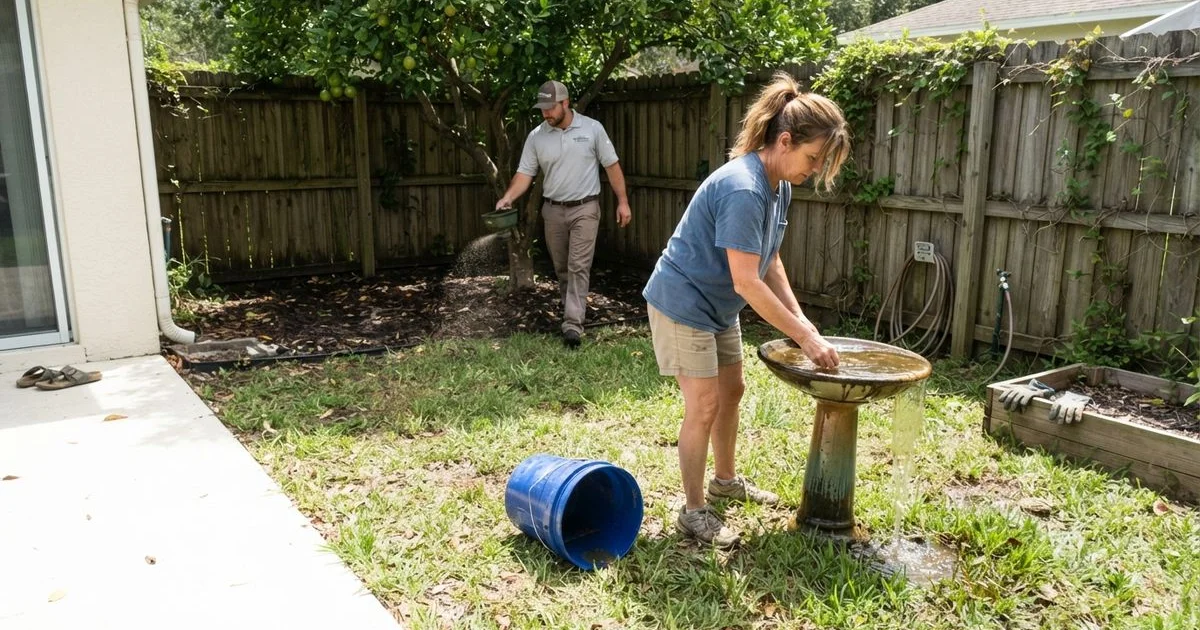
Tampa’s climate is close to ideal for mosquitoes: warm most of the year, humid, and prone to sudden downpours that leave water sitting in places homeowners do not always think to check. Yard prep before the season ramps up is less about a single treatment and more about removing the conditions mosquitoes need to breed, then deciding whether a standing barrier plan is worth adding on top.
When mosquito activity actually peaks here
Mosquitoes do not read a calendar, but Tampa’s pattern is fairly predictable. Numbers climb once the rainy season starts, typically late May into June, and stay elevated through the humid stretch into October. A dry spring can push the worst weeks later; a wet one pulls them earlier. If you are planning yard work around it, treat the start of the rainy season as your trigger, not a fixed date.
Yards near retention ponds, wooded lots, or anywhere water collects after storms tend to see activity earlier and heavier than yards on higher, more open ground. If your property backs up to a canal, greenbelt, or drainage easement, budget extra attention there.
Check for standing water first
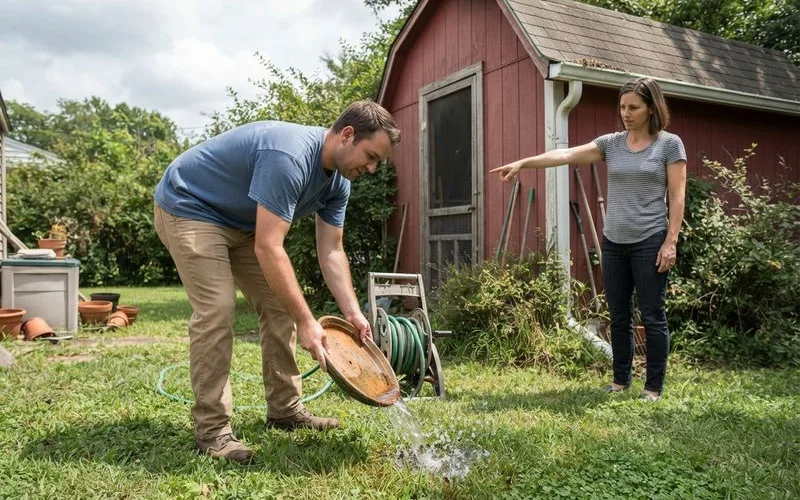
Before any spray goes down, standing water removal is the step that matters most, since a single neglected container can produce more new mosquitoes in a week than a barrier treatment kills.
| Common water source | Why it matters | What to do |
|---|---|---|
| Clogged gutters | Holds water for days after rain | Clear debris each season |
| Plant saucers, birdbaths | Refills after every rain | Dump and refill twice a week |
| Tarps, boat covers, tire swings | Pools water in folds | Store flat or drain regularly |
| Kiddie pools, unused planters | Stagnant for weeks if forgotten | Empty when not in active use |
| Low spots in the lawn | Collects after heavy storms | Regrade or add drainage if recurring |
Mosquitoes that transmit disease locally, including some Aedes species, need only a small amount of standing water and a few days to complete a breeding cycle, so a weekly walk of the property does more good than most people expect.
Trim back what gives mosquitoes cover
Adult mosquitoes rest on the undersides of leaves in shaded, humid spots during the day. Thinning dense shrub lines, keeping grass cut shorter along fence lines, and pruning low-hanging branches near patios reduces the resting habitat close to where people actually spend time outside. This will not eliminate a heavy population on its own, but it does make any treatment you add work better, since sprays reach foliage more evenly when it is not overgrown.
Barrier treatment plans: what they involve
A professional barrier treatment applies product to the underside of leaves, shaded vegetation, and other resting spots around the yard’s perimeter rather than fogging the open air. Most providers in the Tampa area run a monthly or twice-monthly schedule through the active season, since the product breaks down with sun and rain and needs reapplication to hold.
If you want to see the range of local providers offering these plans before you request quotes, the mosquito and lawn pest category lists options serving the Tampa area with typical service details.
Choosing between one-time and ongoing treatment usually comes down to how you use the yard. An event-only spray ahead of a wedding or party is reasonable for a single occasion. A yard used daily for kids or pets through the summer generally sees more value from a recurring plan, since coverage lapses between one-time visits.
DIY versus hiring a pro
Homeowners can meaningfully cut mosquito pressure with consumer tools: mosquito dunks in anything holding water that cannot be drained, yard foggers for a single event, and consistent standing-water checks. Where DIY tends to fall short is reach and consistency, treating a half-acre lot with heavy shade by hand every two weeks is a lot to keep up with all season. Professional plans exist mainly to solve that consistency problem, not because the underlying product is unavailable to consumers.
A quick pre-season checklist
- Walk the property weekly for standing water once rain starts
- Clear gutters and drainage before the wettest months
- Thin dense shrubs and mow fence lines shorter
- Decide between event-only spray and a recurring plan based on how the yard gets used
- Ask any provider what product they use and how it is timed around flowering plants
Mosquito-borne illness is uncommon but not impossible in Florida, and yard prep is general prevention information, not a substitute for medical advice if you or a family member develops symptoms after a bite.
For more on how this directory reviews and ranks local providers, see our ranking methodology. You can also browse the homepage for other pest topics relevant to Tampa homeowners.
Frequently asked questions
- When does mosquito season start in Tampa?
- Mosquitoes are active nearly year-round in the Tampa area, but activity climbs sharply once the rainy season starts in late May or June and stays high through October, tracking rainfall and temperature more than the calendar.
- How much does yard mosquito treatment cost?
- Barrier spray plans typically run as a per-visit fee that scales with yard size and how often you book, with monthly visits during the season costing less per trip than one-time or event-only treatments.
- Does mosquito spray hurt bees or pets?
- Standard barrier sprays target resting adult mosquitoes on foliage and can affect other insects that land on treated leaves; ask a provider about timing sprays around bloom periods and about pet-safe or reduced-risk product options.
- Can I treat my yard myself instead of hiring someone?
- Homeowners can reduce breeding sites and use consumer foggers or dunks with some effect, but professional barrier treatments reach further into shrub lines and reapply on a schedule, which matters more in a yard with heavy shade or standing water.