Preparing your home for termite swarming season in Florida
By Ethan Silva · Updated 2026-07-07
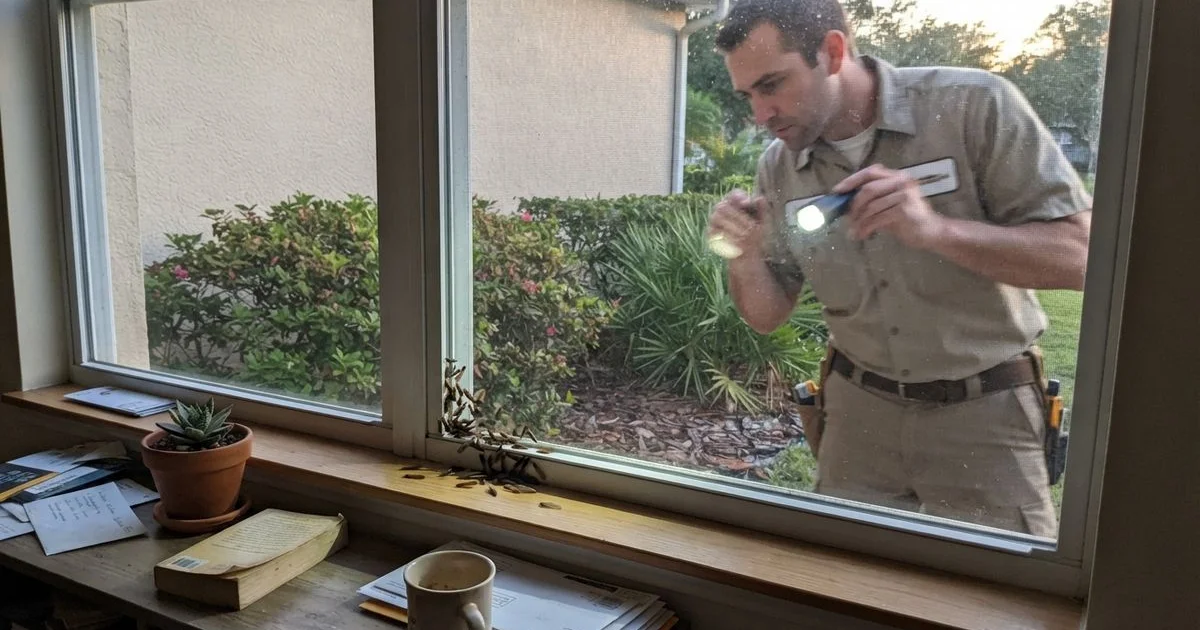
A termite swarm is not the problem, it is a symptom. By the time winged termites appear inside a home, there is generally an established colony somewhere nearby that has been active for a while already. Knowing when to expect swarms and how to prepare puts you ahead of the problem instead of reacting to it.
When swarms typically happen in Florida
Subterranean termites in Florida most commonly swarm in spring, often triggered by warm temperatures following rain, though exact timing shifts year to year. Drywood termites follow a less predictable pattern and can swarm at other points through the year. Given Florida’s consistently warm climate, treating swarm season as a single fixed window is less useful than staying alert through spring and watching for activity any time conditions are warm and humid after rain.
Telling termite swarmers from flying ants
This distinction matters because the response is different, ant activity is a nuisance, termite swarmers indicate a structural risk worth investigating.
| Feature | Termite swarmer | Flying ant |
|---|---|---|
| Antennae | Straight | Bent (elbowed) |
| Waist | Thick, no visible pinch | Narrow, pinched |
| Wings | Two pairs, equal length | Two pairs, unequal length |
| Where found | Often near foundations, window sills, light sources indoors | Similar locations, less tied to foundation areas |
What to do if you see a swarm
- Do not just clean up and move on. Note the date and exact location, near a specific window, in the garage, along a baseboard.
- Collect a few samples if you can, in a sealed container or on tape, since accurate identification helps a technician confirm species and treatment approach.
- Call a licensed termite provider for an inspection. A swarm indoors typically means a colony is established somewhere accessible to the structure, and the inspection will look well beyond the spot where you saw the swarmers.
- Do not assume it is a one-time event. A swarm that appears once and is never seen again does not mean the colony left. Swarms are periodic; the underlying colony persists between them.
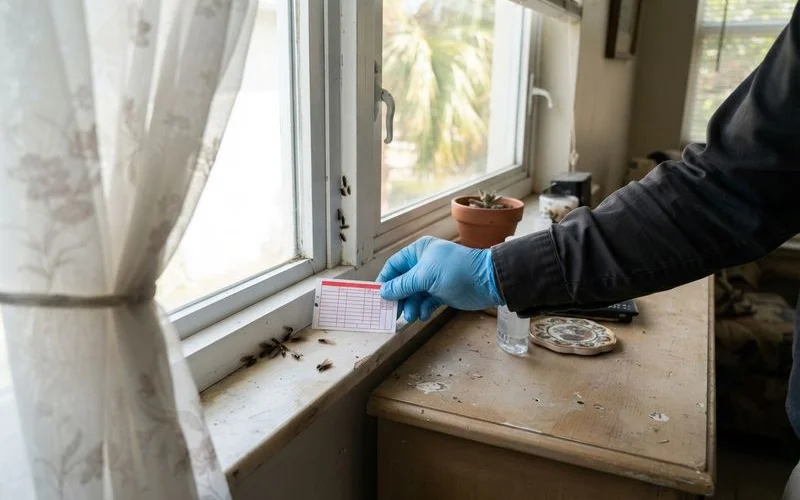
Preparing before swarm season arrives
- Schedule an annual termite inspection ahead of spring if you do not already have a bond or monitoring plan in place
- Reduce wood-to-soil contact around the foundation, mulch pulled back from siding, firewood stored away from the house
- Address any moisture issues near the foundation, since termites are drawn to damp wood and soil
- Know what an existing termite bond covers if you have one, and confirm it is current
- Check exterior lights at night during spring, since outdoor lighting near the home can draw swarmers toward the structure on humid evenings after rain
Homes with bait stations already installed as part of a monitoring plan give a technician an early look at activity between full inspections, which is one reason a standing termite plan tends to catch a developing problem earlier than an annual visit alone.
A note on fumigation and tenting
If an inspection finds drywood termites requiring whole-structure fumigation, the process involves temporarily vacating the home, sealing it under a tent, and introducing a fumigant gas that reaches termites hidden deep inside wood members. This requires leaving the home, including pets and plants, for the duration set by the licensed fumigator, typically a couple of days, and following the reentry clearance before returning. This is general information about how fumigation typically works, not a substitute for the specific safety instructions your fumigation company provides for your property.
Why acting on a swarm matters
Termite colonies in Florida’s climate do not pause for long. A colony left unaddressed after a swarm continues to grow and can cause meaningful structural damage over months or years, damage that standard homeowners insurance generally does not cover. Acting on a swarm sighting promptly is one of the more cost-effective decisions a Florida homeowner can make.
To find licensed termite providers serving the Tampa area, the termite control category lists relevant options.
For more on how this directory scores and ranks providers, see the ranking methodology. Visit the homepage for other Tampa pest topics.
Frequently asked questions
- When is termite swarming season in Florida?
- Subterranean termites in Florida commonly swarm in spring, though timing varies with temperature and rainfall, while drywood termites can swarm at different points through the year, so seeing swarmers is possible outside the typical spring window too.
- What does it mean if I see winged termites in my home?
- Winged swarmers indoors generally indicate an active, established colony nearby, since swarmers emerge from a mature colony to start new ones, so seeing them inside is a stronger signal than seeing a few outdoors near a porch light.
- Are termite swarmers the same as flying ants?
- No, though they are commonly confused. Termite swarmers have straight antennae, a thick waist, and wings of equal length, while flying ants have bent antennae, a pinched waist, and wings of unequal length.
- What should I do if I see a swarm?
- Note the location and date, collect a few swarmers if possible for identification, and contact a licensed termite provider for an inspection rather than treating the visible swarmers alone, since the swarm itself is a symptom, not the actual problem.
Related on this site
- Browse termite control & inspection providers
- WDO inspections and Florida home sales: what buyers and sellers need to know
- Is termite damage covered by homeowners insurance in Florida?
- Getting your yard ready for mosquito season in Tampa
- After a storm: pest and rodent problems Tampa homeowners should watch for
- All guides →