Is termite damage covered by homeowners insurance in Florida?
By Ethan Silva · Updated 2026-06-18
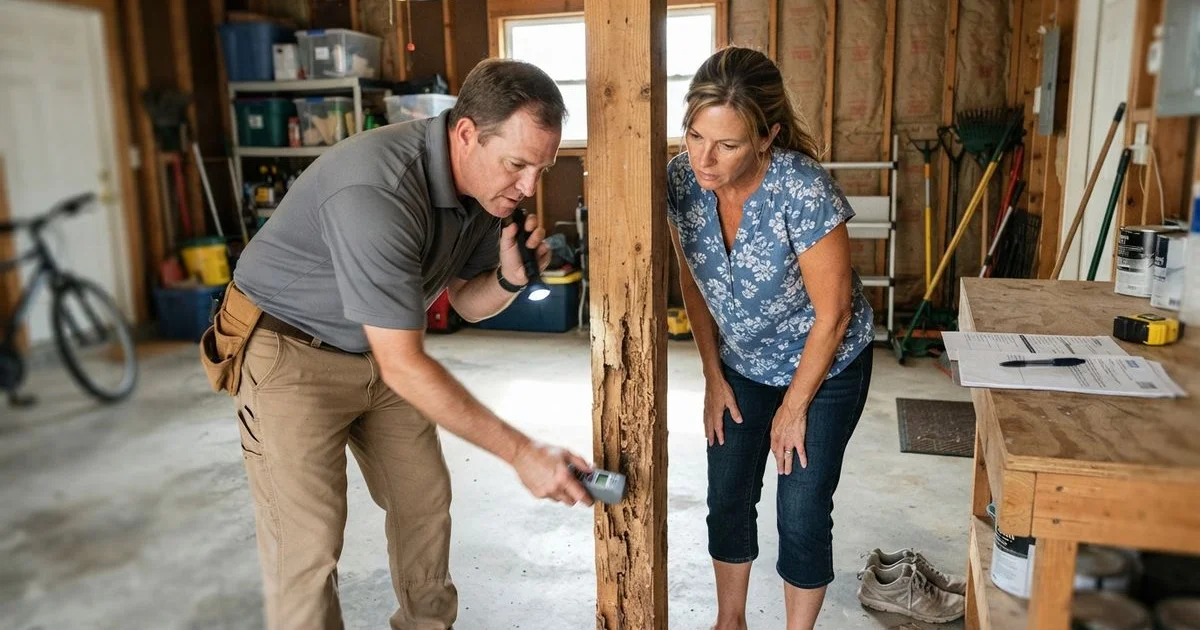
Florida’s climate makes termite activity close to a certainty over a long enough timeline, which makes it surprising to a lot of homeowners that their insurance policy will not pay a cent toward the damage. Here is why that gap exists and what most Florida homeowners use instead.
Why standard homeowners insurance does not cover it
Homeowners insurance is built around sudden, accidental events, a tree falling on the roof, a burst pipe, a fire. Termite damage develops slowly, often over months or years, and insurers treat it the same way they treat mold from a long-term leak or rot from deferred maintenance: as something that ongoing upkeep and inspection should have caught, not a covered loss. This exclusion is close to universal across insurers and is written into nearly every standard policy sold in Florida.
There are limited exceptions. Some policies will cover collapse damage if termite activity directly causes a structural collapse, but this is narrow and specific, not a general safety net for termite repair costs.
What Florida homeowners use instead: the termite bond
A termite bond is a service agreement with a pest control company rather than an insurance policy. In exchange for an annual renewal fee, the company commits to retreating the property if termites return during the bond period. Some bonds, often called repair or damage bonds, go further and cover a stated amount of repair costs if termites cause damage while the bond is active. Others are treatment-only, covering retreatment but not repairs.
| Bond type | What it covers | What it does not cover |
|---|---|---|
| Treatment-only bond | Retreatment if termites return | Repair costs for any damage found |
| Repair/damage bond | Retreatment plus repair costs up to a policy limit | Damage that predates the bond, or damage beyond the stated limit |
What it typically costs
Initial termite treatment tied to a bond varies by treatment type and the extent of the problem. Targeted drywood termite treatment has been reported around $1,300 in some cases, while whole-structure fumigation can run from roughly $2,000 up to $4,300 or more depending on the size and complexity of the home. Annual bond renewal fees are typically a smaller recurring cost layered on top of the initial treatment, though the exact figure depends on the provider and the bond terms.

Does a bond transfer if you sell your home?
Many bonds can transfer to a new owner, sometimes for a transfer fee, which can be a selling point during a home sale. Ask the pest control company directly whether the specific bond on a property is transferable and what, if anything, the new owner needs to do to keep it active. This is worth checking before closing on a home purchase in Florida, since a lapsed bond means starting protection from scratch. Bond status is also one of the things that comes up during the WDO inspection most Florida home sales require.
Is a bond worth it if you already have a treatment plan?
A standard pest control plan generally addresses surface pests, ants, roaches, spiders, but termite protection is typically a separate line item because the treatment and monitoring methods differ, liquid soil barriers, bait stations, or periodic inspections built around termite biology specifically. If your property has had any termite history, or sits in an older neighborhood with a documented pattern of activity, a bond is generally worth the annual cost relative to a full retreatment or repair bill if an infestation is caught late.
To compare local providers who offer termite bonds and treatment in the Tampa area, the termite control category lists options with relevant service details.
This is general information about insurance and pest control industry practices in Florida, not a substitute for reviewing your specific homeowners policy with your insurance agent, since exact exclusions and any narrow exceptions vary by carrier and policy.
For more on how this directory scores providers, see the ranking methodology. Visit the homepage for other Tampa pest topics.
Frequently asked questions
- Does homeowners insurance cover termite damage in Florida?
- Almost never. Standard homeowners policies treat termite damage as a preventable maintenance issue rather than a sudden, accidental event, so it is excluded from coverage in the vast majority of policies, regardless of insurer.
- Why do insurance companies exclude termite damage?
- Insurers generally classify termite damage the same way they classify mold from a slow leak or rot from deferred maintenance, as something a homeowner could have prevented or caught early with regular upkeep, which puts it outside the sudden-and-accidental events a typical policy covers.
- What is a termite bond and how is it different from insurance?
- A termite bond is a service agreement with a pest control company, not an insurance policy, that commits the company to retreat the property if termites return and, with some bonds, to cover repair costs up to a stated limit, in exchange for an annual renewal fee.
- How much does a termite bond cost?
- Initial treatment tied to a bond commonly runs from roughly $1,300 for a targeted treatment up to several thousand dollars for whole-structure fumigation, with annual renewal fees typically much lower than the initial treatment cost.
Related on this site
- Browse termite control & inspection providers
- WDO inspections and Florida home sales: what buyers and sellers need to know
- Preparing your home for termite swarming season in Florida
- What pest control costs in Tampa and what changes the price
- Commercial pest control pricing: what drives the cost of a contract
- All guides →